
DXA Bone Density
Evaluation
Why you should get a DXA
Osteoporosis is an extremely common weakening of the bone structure that often goes undetected until the patient sustains a break in these “brittle bones.” It results in approximately 1.7 million hip fractures per year worldwide and affects almost a third of all postmenopausal women in the United States. Once you have sustained one osteoporotic fracture, you are at a significantly increased risk to have another. While women are more at risk for osteoporosis, it does occur in men as well. About 15-30% of men with osteoporosis will have one or more fragility fractures. The most common sites of fractures are at the wrist, vertebra and hip.
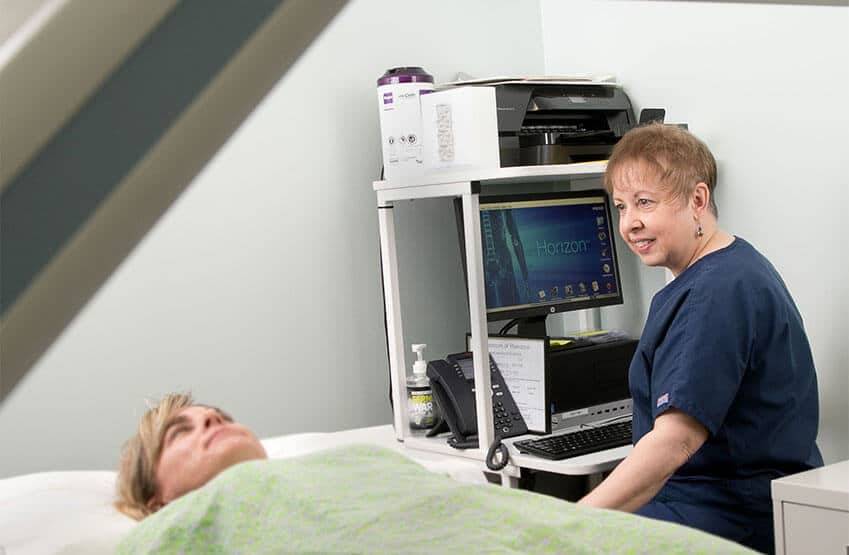
The DXA is a 15-minute evaluation that can determine if you have low bone density. This allows treatment with the goal of preventing future fractures.
Increased risk factors for osteoporosis

Women who have low or no estrogen

Chronic use of seizure medications

Men with low testosterone

Thyroid disease

Small skeletal frame

Parathyroid disease

Poor calcium intake

Chronic disease, such as rheumatoid arthritis, diabetes, liver or kidney disease

Tobacco use

Family history of osteoporosis or hip fracture

Frequent alcohol or carbonated beverage intake

Loss of height of at least 1.5 inches

Chronic use of steroids

History of fractures with minimal trauma
Women who have low or no estrogen
Men with low testosterone
Small skeletal frame
Poor calcium intake
Tobacco use
Frequent alcohol or carbonated beverage intake
Chronic use of steroids
Chronic use of seizure medications
Thyroid disease
Parathyroid disease
Chronic disease, such as rheumatoid arthritis, diabetes, liver or kidney disease
Family history of osteoporosis or hip fracture
Loss of height of at least 1.5 inches
History of fractures with minimal trauma
How the test is performed
Patients are required to remove all clothing with metal zippers, buttons or buckles. The metal could falsely elevate test results, as could the presence of any dye or barium from recent studies such as a myelogram or intestinal x-rays. With the patient lying on a padded table, a moving arm on the machine will be centered over the lower spine and again over the hip. The whole process takes around 15 minutes, involves minimal radiation and does not require injection. A doctor will interpret the report. The patient will be notified and started on a treatment plan if necessary.
What the test can reveal
The test can determine calcium density and if you are at an increased risk for a bone fracture. If bone loss is present, your doctor will determine the contributing factors and recommend therapy. There are reported values called T-scores. A T-score between -1.0 to -2.4 could point to osteopenia. Osteopenia suggests some bone loss, though not as significant as osteoporosis. T-scores of -2.5 or lower indicate osteoporosis.