
Injections
There are many components involved in treating inflammatory diseases. Oral medication, IV or self-injected medications, physical or occupational therapy, exercise, weight loss, behavior modification, surgery, and injections are all part of the spectrum of care. Corticosteroids are often injected for treatment of tendinitis, bursitis, or arthritis.
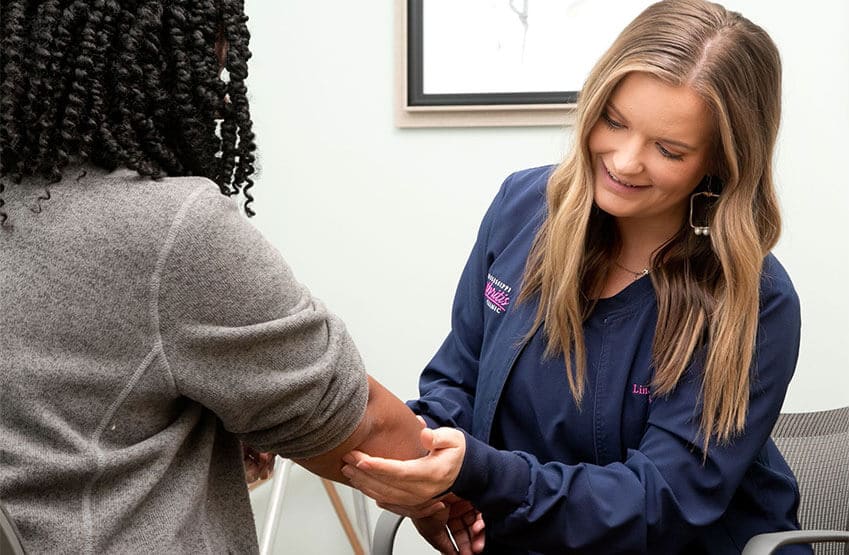
Recommendations for patients receiving joint or tendon injections:

Notify your provider if you have recently received a joint injection elsewhere. As a general rule, we schedule steroid injections 3 months apart and hyaluronic acid injections 6 months apart.

Following the injection, you may find it helpful to put ice on the affected area for a few minutes every couple of hours. Try to limit movement and weight bearing for 24 – 48 hours.

You will be provided with an informed consent. Please read this and ask questions about anything that causes concern.

If you have diabetes and receive a steroid injection, you may see a rise in your blood sugar. You should monitor your blood sugar for one week after the injection.

If you know in advance or suspect that you will need an injection of a knee or a dominant upper extremity, please bring a driver. We like to put the injected joint at rest for a day or two after injection.

Rarely, there are transient reactions to the crystals in the steroid. The area could become more inflamed and painful. Apply ice and take Tylenol. Notify your doctor.

Dress in loose, comfortable clothing. We don’t want to put undue stress on a painful joint when it has been injected.

If you have any concerns after you leave, please call the office.

All injections are performed using a sterile technique. Let the medical assistant know if you are allergic to iodine, which is sometimes used to clean the area,
Notify your provider if you have recently received a joint injection elsewhere. As a general rule, we schedule steroid injections 3 months apart and hyaluronic acid injections 6 months apart.
You will be provided with an informed consent. Please read this and ask questions about anything that causes concern.
If you know in advance or suspect that you will need an injection of a knee or a dominant upper extremity, please bring a driver. We like to put the injected joint at rest for a day or two after injection.
Dress in loose, comfortable clothing. We don’t want to put undue stress on a painful joint when it has been injected.
All injections are performed using a sterile technique. Let the medical assistant know if you are allergic to iodine, which is sometimes used to clean the area,
Following the injection, you may find it helpful to put ice on the affected area for a few minutes every couple of hours. Try to limit movement and weight bearing for 24 – 48 hours.
If you have diabetes and receive a steroid injection, you may see a rise in your blood sugar. You should monitor your blood sugar for one week after the injection.
Rarely, there are transient reactions to the crystals in the steroid. The area could become more inflamed and painful. Apply ice and take Tylenol. Notify your doctor.
If you have any concerns after you leave, please call the office.